
Follow libertyLOL on your favorite social media sites:FacebookYoutube Tumblr Pintrest Countable: Government Made Simple Steemit blog on a blockchain Patreon Gab.ai libertyLOL's Liberty Blog RSS Feed We also run a couple twitterbots which provide great quotes and book suggestions: Murray Rothbard Suggests Tom Woods Suggests Jason Stapleton Suggests Progressive Contradictions MORE FROM LIBERTYLOL:
0 Comments
Follow libertyLOL on your favorite social media sites:FacebookYoutube Tumblr Pintrest Countable: Government Made Simple Steemit blog on a blockchain Patreon Gab.ai libertyLOL's Liberty Blog RSS Feed We also run a couple twitterbots which provide great quotes and book suggestions: Murray Rothbard Suggests Tom Woods Suggests Jason Stapleton Suggests Progressive Contradictions MORE FROM LIBERTYLOL:
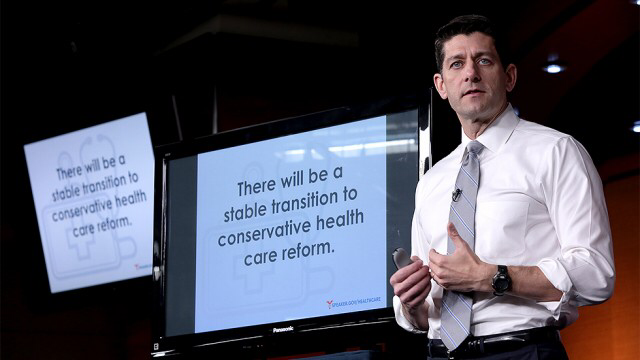
I've been watching the health care debate over the last few weeks very closely. It's one of the most important policy challenges facing this country--second only to the national debt and the economy. So far, it seems that the GOP's strategy can best be summarized in the following manner.
PLAN A: Quickly, quietly, and in the most partisan manner possible, secretively draft a very bad piece of health care legislation and then rush it out for a vote before the rest of Congress or the public can read it and see how bad it is. Result: Failed (in a matter of days). PLAN B: Quickly, quietly, and in the most partisan manner possible, secretively draft a very bad piece of health care legislation that makes only the bare minimum of improvements on Plan A's bill and then rush it out for a vote before the rest of Congress or the public can read it and see how bad it is. Result: Failed (in a matter of days). PLAN C: Simply give up on any sort of reform at all and instead just repeal Obamacare. Result: Failed (the very next day). PLAN D: Simply give up even on efforts to repeal Obamacare, hope it fails (no matter how many Americans that hurts), and then see if we can quickly, quietly, and in the most partisan manner possible, secretively draft a very bad piece of health care legislation and then rush it out for a vote before the rest of Congress or the public can read it and see how bad it is. Result: Does it really matter? (If the plan succeeds, then the country fails. If the plan fails, then the country fails.)
CAVEAT 1 TO PLANS A THROUGH D: If possible, vote on bills before the CBO has had a chance to evaluate them because when you've written bad bills, objective assessments are not your friend.
CAVEAT 2 TO PLANS A THROUGH D: If possible, convince junior members of Congress to ignore the fact that insurance companies, doctor groups, patient groups, government researchers, university researchers, and non-profits all oppose the bill--a rare instance of complete unity across the health care stakeholder spectrum. (In other words, convince more junior members of Congress to ignore the fact that the only people who support these bills are the more senior members of Congress who paid staffers to write the bills for no other reason than to be able to say that they fulfilled a campaign promise. They might as well just pass a blank sheet of paper that says "Obamacare Repeal" and then pat themselves on the proverbial back.) The political calculation of Mitch McConnell, who is quite possibly one of the worst Republican leaders currently living--and very near the worst even if we also include those who are no longer living as well as those who have never lived--also is absolutely impossible for more rational minds to grasp. First he decides to put up for vote a bill that stands no chance of passing. No surprise here: It fails. Then he calculates that drafting another bill that stands no chance of passing is just what the doctor (no pun intended) ordered. Lo and behold, it fails too! Finally, he decides simply to repeal Obamacare outright, and what do you know: This effort failed before he'd even written the bill. He has now nearly single-handedly assured the GOP, which is running the least productive government in history, of a significant black eye in next year's elections. Let's be honest: Even though I'm a Republican, I'm well aware that since the GOP took control of the government, absolutely nothing has happened that would give the American people any confidence that we are actually able to govern. The GOP can't pass bills through Congress even though we control BOTH houses of Congress, and we certainly aren't bothering to lift a finger to bring on board any Democratic support. (They did this to us, so we should do it to them, right? The American people are paying us large salaries simply to do unto the others as they did unto us, right?) What ever happened to reaching across the aisle, sitting down in good faith, and speaking in terms of what is good and bad for the American people? What ever happened to setting aside partisanship and simply committing to drafting the best piece of health care legislation possible? What ever happened to the idea that it's better to do something right or to not do it at all? What ever happened to the idea that it's better to do something right than to do it fast? What ever happened to wanting to craft into legislation ideas that would garner overwhelming support, not ones that are considered an utter blowout if they can pass one house of Congress by just one vote? What ever happened to the fact that the point of being in office isn't to defeat the other side but is to win for the American people? "Get the equivalent of a Ph.D. in libertarian thought and free-market economics online for just 24 cents a day." 
Follow libertyLOL on your favorite social media sites:FacebookYoutube Tumblr Pintrest Countable: Government Made Simple Steemit blog on a blockchain Patreon Gab.ai libertyLOL's Liberty Blog RSS Feed We also run a couple twitterbots which provide great quotes and book suggestions: Murray Rothbard Suggests Tom Woods Suggests Jason Stapleton Suggests Progressive Contradictions MORE FROM LIBERTYLOL:

Dear Mr. Republican writes:
The Republican Party is in control of both houses of Congress and the White House. Why then are we having such difficulty passing health care reform? Never mind convincing Democrats to sign on: Why are we having such difficulty convincing members of our own party to support the House and/or Senate measures? Answer: Misplaced focus. Both the House and Senate are singularly focused on cutting costs to the government--and not just any costs: only short-term costs. This could only work if health care were only a matter of dollars and cents (short-term dollars and cents, that is). This is not the case however, especially when government cost-cutting leads to higher costs for individual citizens through higher premiums, less coverage, etc. These are the inevitable results of both the Senate and the House bills. Furthermore, the primary mechanism by which these bills lower short-term costs (and, ironically, the primary mechanism by which they inadvertently raise long-term costs) is by kicking people off their insurance plans--plans that, in many cases, people bought with their own money. The "to-cover-everyone-or-not-to-cover-everyone" ship has sailed, however. That argument is over. If you thought that extending coverage to everyone was painful, just wait until you see what happens when you take that coverage away. Obamacare increased costs, instituted a Constitutionally-dubious individual mandate, and imposed onerous regulations on health care providers. On the other hand, it expanded coverage, protected those with preconditions, and implemented free-market exchanges (albeit very flawed ones) whereby people can purchase health insurance with their own money. The answer isn't to wholesale repeal Obamacare. That's the uncomfortable reality that we conservatives find ourselves in: we've campaigned for more than seven years on repealing it only to find that repealing it isn't the right answer. As I said, despite all its negative aspects, it does indeed have merits as well. The answer, then, is to FIX Obamacare. Our health care system is enormous: 18% of GDP. No single bill can fix such a large and complicated system all at once. We should expect it to be accomplished in steps over time, and that is precisely what we should be doing. We should not be repealing the other party's efforts every few years and starting over. We should be cumulatively fixing problems as we can--making improvements and adjustments where we can, when we can. At this point, our focus should be trifold: (1) ensuring universal coverage, (2) increasing quality of health care services, and (3) lowering costs both to the government and to individuals. Single-payer systems are the most obvious way to ensure universal coverage, and they are much in style on the Left. I must apologize to the Democrats though: I dismiss that option out of hand. These systems are running enormous deficits in Europe and, in some cases, they are in the process of cutting services. Only in very small, homogeneous countries are they not adding to government deficits appreciably. The United States is the third largest country on Earth, with health care costs that run into trillions of dollars annually. This is not a cost that our government can afford, especially now that our national debt already exceeds 104% of GDP. (No, a single-payer system would not lower costs enough to make it affordable for the government unless quality were severely sacrificed.) Single-payer options are non-starters for me. Period. We should be thinking outside the box about revolutionary improvements that capitalize on what have always been the bedrock strengths of our economy: free markets and innovation. If I were a dictator, these are the reforms I'd enact: (1) Protections for those with preconditions. (2) Repeal of the individual mandate but with a caveat: Those who are able to purchase health insurance but choose not to do so must go on a payment plan for any ER trips or other medical services--including catastrophic ones--and must pay 100% of their own costs at no cost to the government. (Those who are unable to afford health insurance would be covered as they are now. If they lost their coverage, then they would go to the ER for all medical problems, and you know who pays that bill: taxpayers. This is even more expensive than insuring them.) (3) Change the Obamacare exchanges from many state-based ones to one national exchange. This would add many more options for people to choose among and would subject all insurance companies to nation-wide competition. (4) Bar the selling of health insurance to individuals in any way other than through the national exchange. (5) Institute a nation-wide health care regulatory framework. As it stands, health insurance companies can monopolize individual states. It's time that we subjected them to free-market competition that involved every company in this country, not just those in respective states. (6) Increase the tax incentives for people to use Health Savings Accounts (HSA), which give Americans 100% control over their own health care without the interference of insurance companies or considerations of doctor networks, covered/non-covered services, etc. These tax incentives should extend both to individuals and to companies that offer HSA's to their employees and contribute to them. (7) Require all hospitals, clinics, etc. to publicly publish prices for all services offered. This would enable people to begin searching for value as we do with all other products and services. (8) Following up on number 7, require all hospitals, clinics, etc. to report RESULTS--good and bad--as well. When Americans know results and prices, they can start to make informed, free-market decisions about health care, and hospitals, clinics, etc. will have to compete both on price and on quality. (9) Reform the malpractice environment. The cost of malpractice insurance is too high, and the caps (when they exist) are too high. I understand that having to undergo surgery again to remove a tool that a doctor left behind is terrible, risky, and costly. It shouldn't happen. That said, it does sometimes happen, and you shouldn't get to sue and become a multi-millionaire as a result of it. Malpractice has gotten out of hand and is driving up costs. (10) Stop having Medicare and Medicaid pay for services. Instead, institute "pay for results." This would lead to higher reimbursement for preventative medicine and higher reimbursement for services that lead to better results. There's no reason that a CT scan needs to cost $3,000 here when it costs the hospital almost nothing to administer it and when it costs only $200 in some other countries. This is what happens when you pay only for services: it creates incentives to perform a lot of them and to charge as much as possible for them. Under a "pay for results" system, that CT scan would be reimbursed commensurate with its results as part of a broader treatment plan. (11) Fraud in Medicare and Medicaid is somewhere between $50 billion and $150 billion annually. It's time that we cracked down on that with a vengeance. There should be a severe mandatory minimum sentence for anyone caught defrauding ANY welfare service--health care or otherwise--and for those who facilitate it. (12) Require all medical providers who accept government-sponsored patients to use electronic-only record systems. It's time to step into the 21st Century. (13) Block hospital mergers that lead to regional monopolies. Hospitals have long argued that allowing them to consolidate without limit enables them to cut costs for patients. This is patently false. A Bloomberg study recently confirmed what we really all new: hospitals generally increase costs even further after consolidating. Thus, costs go up and alternatives down. The same goes for health insurers. These things cannot be done secretly. Why is McConnell writing health care bills in secret and then trying to immediately rush them to a vote before anyone has read them? Why is he twisting arms by telling GOP senators that if they don't vote for it, he'll seek a bipartisan solution? Since when is bipartisanship a threat? Isn't reaching across the aisle in order to solve problems exactly what we pay these people to do? Basically, McConnell is threatening to simply do his job, which is plain odd. That itself seems like a form of malpractice. I'm concerned that the goal of the Republican Party's health care efforts has become simply to repeal Obamacare, not to actually offer more coverage at a lower price for higher-quality services. We've lost sight of the goals. The goals are to reign in deficits and increase quality, not to simply repeal a certain bill. While we bicker about three bad health care bills (Obamacare, House bill, and Senate bill), real health care reform languishes. Tax reform languishes. The national debt grows. China usurps our leadership role in certain areas. Amtrak train derailments have become more common than safe arrivals. Other countries increase their lead on us in the public transportation arena. American companies move overseas. Wages remain largely stagnant. North Korea continues to work toward a deliverable nuclear weapon that they promise they'll deliver to the continental U.S. at some point. These are real challenges that must be tackled, and it's time that we started to tackle them. My party has exactly zero accomplishments to its name so far, and we've been in complete control of the government for nearly six months. Distractions like the "voter fraud" commission and loss of sight of true goals are the cause. I think that the above proposals would go a long way toward fixing our health care system and reducing government deficits. If we could talk about those--and the corresponding specifics of other issues--then I think we'd finally be on track to doing good work for this country and her citizens.
libertyLOL's response: Negative. REPEAL.
The end result of more regulation is ONLY higher prices. More regulation? More Government interference? More expensive. NOTHING GOVERNMENT CAN DO CAN RESULT IN LOWER COSTS (Economics in One Lesson-Hazlitt) Most would prefer the doctor, network and cost of the care they received prior to ObamaCare. Sure there's some precondition cases that have sob stories. So here's how to fix: 1) Repeal 2) Get government out of the way of charity. I often give to GoFundMe pages for people with problems. Last week I actually heard someone say "Why should I give to that person, that's why I pay taxes". What a horrible thing to say but it's the result of exporting our personal responsibility to each other to a monstrosity of a federal government. 3) Instill Price Transparency, Allow HSAs to prevent ill effects of the Third Payer Problem. 4) Decrease barriers to entry for those wanting to become doctors (increase supply of care brings down costs). 5) Incentivize and Educate on Preventative Care (eating spinach instead of Big Macs). 6) Allow selling of insurance plans across borders (even national borders), competition increases innovation, value and decreases costs. I truly believe that getting out of the market's way in Health Care could find us in 5-10 years with phenomenal system. One where I feel sick, I click on an app in my phone, a physician Skypes with me or comes to my house, he/she puts a prescription in to the local CVS and it arrives that evening by UberMeds. I only really disagree with your #1, 3 and 4 I truly believe that getting out of the market's way in Health Care could find us in 5-10 years with phenomenal system. One where I feel sick, I click on an app in my phone, a physician Skype's with me or comes to my house, he/she puts a prescription in to the local CVS and it arrives that evening by UberMeds. 
FREE BITCOIN! When you buy $100 Bitcoin through this link, you'll earn $10 of FREE Bitcoin! (IMMEDIATE 10% ROI!)
Dear Mr. Republican's Response:
(1) I didn't advocate for more regulation. I advocated for smarter regulation. Right now we have 51 health care regulation systems in place. I'm advocating eliminating 50 of them. (2) Repealing Obamacare wouldn't lower costs. It would only lower the rate at which they are increasing. That's not the only point though. The number of uninsured people would increase to more than 40 million, and they would impose an enormous long-term cost through ER visits since that's the only way those people interact with medical facilities. (3) Giving to GoFundMe accounts is great, but that's not a serious national health care policy. We can't base our health care system on GoFundMe accounts. (4) Increasing the supply of doctors doesn't drive down costs. Even Pfizer's last CEO admitted this (Pfizer, of course, profits from the actions of doctors). Doctors charge the "going rate" for their services because their costs are kept largely a secret. Patients cannot price shop. We need more doctors for a lot of reasons, but that won't lower costs--at least not until we require them to public publish both costs and results. (5) As far as selling health insurance across borders, preventative steps, etc. I agree with you. I endorsed all of those in my post. 
libertyLOL's response:
1) Good, 2) you're thinking short term, Eliminate Obamacare and the free market will rush to profit off the immediate gap. People could be re-insured on Day 2. 3) Wasn't saying GoFundMe specifically, but charities in general are exponentially more efficient in providing care than government. 4) Through price transparency, which you advocate, this problem is solved. Yes, right now a supply might not change prices, but that's because the current systems is garbage, which we both agree. Once we have transparency, doctor's salaries become supply/demand enforced by the market. 5) Look at us! 98% in agreement! Let's go change the world! (But Repeal first :P)
Dear Mr. Republican:
I'm not thinking short term at all. I'm advocating against that. Repealing Obamacare would cut costs to the government in the short-term and raise them over the long term. You don't pull the rug out from under people without another plan in place. Millions of Americans would suddenly lose access to everything except an ER. That is a recipe for disaster. You're forgetting that the health care industry does not operating according to supply and demand. It's not a free-market industry. Obamacare isn't the reason for that though. Even before Obamacare, the health care industry did not respond to the laws of supply and demand. That was one of the fundamental problems. Patients have no access to information, and markets are monopolized. More doctors simply led to more doctors charging high fees. Charities are not a viable national health care strategy. Charities are a supplement. They're great--they just can't be THE plan. Anyway, we had a TON of problems before Obamacare came along. Repealing Obamacare won't solve problems that already existed, and forcing millions of people into ER's without insurance certainly won't solve anything. It's time for a good, comprehensive plan.
libertyLOL:
"You don't pull the rug out from under people without another in place" is talking point. The rug should never have been there. This just proves that entitlement programs never actually go away. Cheat to get them in place, no one will have the balls to remove them. Agreed, it's a complex problem. I'm just pushing harder on allowing it to become a free-er market. 5-10 years, we could lead the world in Xrays-R-Us specialty stores and AmazonMobileCatScan drive-by trucker units.
Look at the price trends of 'non regulated' or cosmetic surgeries. We've seen LASIK and Breast Implant prices drop precipitously, but the quality has only gotten better.
The government doesn't sit around and write thousands of pages of regulation in these areas. Normal healthcare? Care quality and choice have dropped, prices have increased... Follow libertyLOL on your favorite social media sites:FacebookYoutube Tumblr Pintrest Countable: Government Made Simple Steemit blog on a blockchain Patreon Gab.ai libertyLOL's Liberty Blog RSS Feed We also run a couple twitterbots which provide great quotes and book suggestions: Murray Rothbard Suggests Tom Woods Suggests Jason Stapleton Suggests Progressive Contradictions MORE FROM LIBERTYLOL:
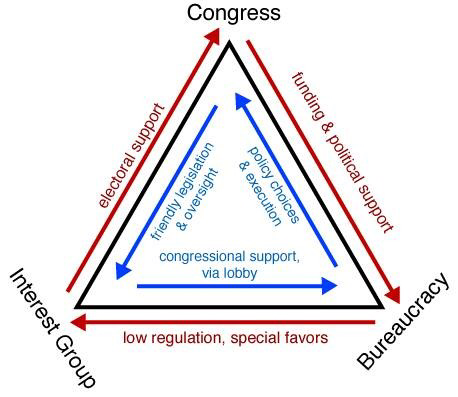
From Senator Cornyn's Facebook Video. Senator Cornyn is one of my two senators in Texas, his video pleads to his constituency that we can't possible repeal ObamaCare:
The Choice My immediate thoughts: REPEAL IT
Republicans have won many elections promising you would. Republicans have passed REPEAL legislation over 50 times in the past 7 years knowing good and well that President Obama wouldn't sign it. Now it's time to get rid of it.
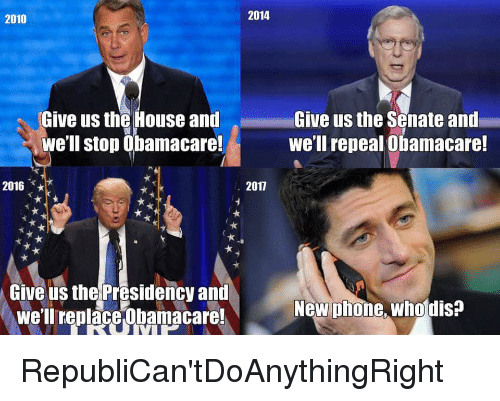
But Liberty Lover, you must personally benefit from a Repeal? What's in it for you?
We all benefit from getting the government out of health care. I'm unaffected but cool assertion that I'd only want a repeal for selfish reasons.
Everyone is affected by health care. To think otherwise is to delude yourself!
I'm Active Duty military, take care of my body, monitor what goes into it and am responsible for my life choices. Keep trying.
The moral argument is to get the government out of health care. In 5-10 years when I get sick, I want to be able to Skype with a physician through an app, get a prescription from the nearest CVS, and have it delivered by UberMeds that evening. Government bureaucracy limits innovation and cost cutting initiatives. It's why even poor people can afford flat screen tvs and smart phones these days (but not health care). It's why breast augmentation and Lasik surgery has ONLY GOTTEN CHEAPER, while the quality has only gotten BETTER. Hint: it's not regulated by government.
FREE BITCOIN! When you buy $100 Bitcoin through this link, you'll earn $10 of FREE Bitcoin! (IMMEDIATE 10% ROI!)
So you're taken care of, just screw the rest of us, huh?
Repealing this governmental monstrosity is best for my children, my family, my friends and my countrymen. So I guess there is THAT bit of selfishness in me. Also, I see you haven't learned your lesson from the last time we let Goverment run more things we depend on. So I'm doing it because I care for you, too, even if you haven't learned yet. You're welcome.
Well, are you going to choose not to use the VA for your health care after you get out of the military because it is government run? When I know prices, I'm able to choose to go pay cash at a local clinic instead of wasting 13 days of my life waiting for the VA (because my time is money) There's corruption in Big Government, feel free to talk to people on the inside. AHA! The hypocrisy of you being in the military and getting socialize health care and not wanting us to have it! Checkm8, lolbertarian!
Because we see the effects! The government can't even take care of veterans (An extremely tiny cross-section of Americans). But you think they can get it right for everyone?
You're obviously not active duty so I'll open the curtains so you can see government-led healthcare. I get ibuprofen. For EVERYTHING. I waited over two years to get a full-thickness tear (front and back) in my labrum fixed. I'm so blessed! I wouldn't wish it on you. Individualism means taking care of yourself and being responsible for your own actions. It's not moral to steal from everyone in order to take care of your body. You do it. Well, the VA outperforms the private sector by far...but you will not hear that on your corporate media channel.
|



|
|
Walter Block's long-run argument that people should donate to the Mises Institute is too vague and is definitely self-serving. Sure, a future where we have more knowledgeable Austrian Economics-educated citizens would be better, but it would have no effect on future weather reports, it's only because free-enterprise necessarily helps the plight of the poor.
"The last best hope for society and a civilized order is the freedom philosophy. The promotion of Austro-libertarianism is the dark horse candidate to protect future generations from horrors such as Katrina. This can and will be done two ways. One, directly, by allowing a private enterprise industry devoted to cloud seeding and other such techniques to stop future storms dead in their tracks. Two, indirectly, by making us ever so much more wealthy, so that we will one day have the wherewithal to support such new technology, and better care for those few who still fall victim."
His section on 'Social Justice; A Scary Concept' is quite eerie as it was written in early 2004, could have just as easily been written today. Just further supports the notion that my children will probably not be going to a public university as it's only gotten worse.
Chapter 35 Dr. Government; The Bureaucrat With the Stethoscope
Again, written in 2001, it's a shame that these economic principles haven't risen to the top in our public consciousness and discussion over healthcare. Now, here we are in 2017 with proof of what ObamaCare (read: regulatory burden) is capable of doing to an industry and the public conversation still remains today "How much should we cut from Medicaid, millions will die!" and "Well, we can't just repeal, let's try and fix this...". No conversation is given to the reduction in regulation which currently creates obstacles for those wanting to become doctors and disincentivizes those wanting to get into that labor market.
Our much-vaunted (in coercive socialistic circles, that is) health care system is predicated on a violation of economic principles. It is built on a foundation of quicksand.
" Some people think there is something special about medical care. There is not. Yes, if we do not avail ourselves of it, we will be in dire straits. But no less can be said for food, clothing, shelter, energy, transportation - you name it. And economic law, just as in the case of chemistry or physics, is no respecter of how important an industry is to human well-being; it works just the same in medical services as for paper clips or rubber bands. Impose artificially lower prices in a market - let alone virtually zero prices as in medicine - and you guarantee a shortage."
When addressing the common argument that we still hear echoed to this day, "But the poor will be left behind if we privatize health care!" Walter Block responds, " Nonsense. The poverty-stricken are treated far better in capitalist countries than anywhere else, and medical service is again no exception. Yes, of course, the impecunious have to wait for the well-off to purchase MRIs (many small states in America have more of them than all of Canada does), but when they do, low-income people too can avail themselves of high-tech diagnostics. This is precisely why the poor have color televisions, computers, cars, and more. Had these too, been socialized, they would still be toys reserved for the rich.
Timely quote on single- payer healthcare:
“Most complaints have focused on the unfairness of a system that allows the privileged to receive medical care within a few days of an injury, while forcing others to wait weeks and even months, if not years. But this is exactly backward. The problem is not that some few people are treated quickly, as they should be. It’s that we aren’t all dealt with like members of an advanced civilization, where quick service is always the order of the day. We all should be treated like paying customers — and if we were, we would be . . . “Some people think there is something special about medical care. There is not. Yes, if we do not avail ourselves of it, we will be in dire straits. But no less can be said for food, clothing, shelter, energy . . . “transportation — you name it.”
"The last best hope for society and a civilized order is the freedom philosophy. The promotion of Austro-libertarianism is the dark horse candidate to protect future generations from horrors such as Katrina. This can and will be done two ways. One, directly, by allowing a private enterprise industry devoted to cloud seeding and other such techniques to stop future storms dead in their tracks. Two, indirectly, by making us ever so much more wealthy, so that we will one day have the wherewithal to support such new technology, and better care for those few who still fall victim."
His section on 'Social Justice; A Scary Concept' is quite eerie as it was written in early 2004, could have just as easily been written today. Just further supports the notion that my children will probably not be going to a public university as it's only gotten worse.
Chapter 35 Dr. Government; The Bureaucrat With the Stethoscope
Again, written in 2001, it's a shame that these economic principles haven't risen to the top in our public consciousness and discussion over healthcare. Now, here we are in 2017 with proof of what ObamaCare (read: regulatory burden) is capable of doing to an industry and the public conversation still remains today "How much should we cut from Medicaid, millions will die!" and "Well, we can't just repeal, let's try and fix this...". No conversation is given to the reduction in regulation which currently creates obstacles for those wanting to become doctors and disincentivizes those wanting to get into that labor market.
Our much-vaunted (in coercive socialistic circles, that is) health care system is predicated on a violation of economic principles. It is built on a foundation of quicksand.
" Some people think there is something special about medical care. There is not. Yes, if we do not avail ourselves of it, we will be in dire straits. But no less can be said for food, clothing, shelter, energy, transportation - you name it. And economic law, just as in the case of chemistry or physics, is no respecter of how important an industry is to human well-being; it works just the same in medical services as for paper clips or rubber bands. Impose artificially lower prices in a market - let alone virtually zero prices as in medicine - and you guarantee a shortage."
When addressing the common argument that we still hear echoed to this day, "But the poor will be left behind if we privatize health care!" Walter Block responds, " Nonsense. The poverty-stricken are treated far better in capitalist countries than anywhere else, and medical service is again no exception. Yes, of course, the impecunious have to wait for the well-off to purchase MRIs (many small states in America have more of them than all of Canada does), but when they do, low-income people too can avail themselves of high-tech diagnostics. This is precisely why the poor have color televisions, computers, cars, and more. Had these too, been socialized, they would still be toys reserved for the rich.
Timely quote on single- payer healthcare:
“Most complaints have focused on the unfairness of a system that allows the privileged to receive medical care within a few days of an injury, while forcing others to wait weeks and even months, if not years. But this is exactly backward. The problem is not that some few people are treated quickly, as they should be. It’s that we aren’t all dealt with like members of an advanced civilization, where quick service is always the order of the day. We all should be treated like paying customers — and if we were, we would be . . . “Some people think there is something special about medical care. There is not. Yes, if we do not avail ourselves of it, we will be in dire straits. But no less can be said for food, clothing, shelter, energy . . . “transportation — you name it.”
Chapters 36 - 44
Chapter 36 is a useful discussion of various lifeboat scenarios people use to criticize the Non Aggression Principle on how to respond.
Ch 40 on immigration he writes:
“Free trade”? Yes, a thousand times yes. But “free immigration” is a highly contentious issue amongst libertarians. The prestigious Journal of Libertarian Studies devoted an entire issue to this subject, featuring entries from all sides of this debate. Perhaps the strongest case against open borders can be found in Hans-Hermann Hoppe, Democracy: The God that Failed: The Economics and Politics of Monarch, Democracy and Natural Order; Peter Brimelow, Alien Nation: Common Senseabout America’s Immigration Disaste”
I don't think Brimelow self-identifies as a libertarian, and I think Hoppe is often misunderstood. I would like our group to read Democracy maybe in August?
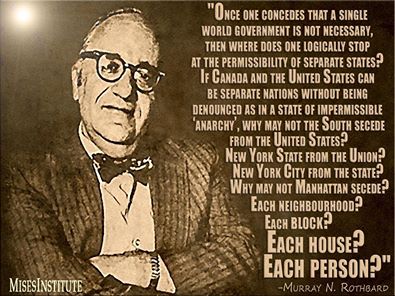
I agree with Block on secession. I thought this was a good discussion along those lines from The Tom Woods Show.
Block makes a good point on p. 521 "that if the South was unjustified in seceding from the North in 1861, given that the South was a slave-holding community at this time, then the same holds for the 13 colonies breaking away from England in 1776, since the latter also engaged in forced “labor of human beings”
On chapter 43 and 44 on the death penalty here is a contra-Block view with which I agree:
"I'm not saying that there aren't crimes worthy of death. In fact, I heartily support the killing of violent criminals in defense of self or others at the scene of the crime. But once a criminal has been apprehended, disarmed and caged, killing him or her isn't self-defense any more."
Ch 40 on immigration he writes:
“Free trade”? Yes, a thousand times yes. But “free immigration” is a highly contentious issue amongst libertarians. The prestigious Journal of Libertarian Studies devoted an entire issue to this subject, featuring entries from all sides of this debate. Perhaps the strongest case against open borders can be found in Hans-Hermann Hoppe, Democracy: The God that Failed: The Economics and Politics of Monarch, Democracy and Natural Order; Peter Brimelow, Alien Nation: Common Senseabout America’s Immigration Disaste”
I don't think Brimelow self-identifies as a libertarian, and I think Hoppe is often misunderstood. I would like our group to read Democracy maybe in August?
I agree with Block on secession. I thought this was a good discussion along those lines from The Tom Woods Show.
Block makes a good point on p. 521 "that if the South was unjustified in seceding from the North in 1861, given that the South was a slave-holding community at this time, then the same holds for the 13 colonies breaking away from England in 1776, since the latter also engaged in forced “labor of human beings”
On chapter 43 and 44 on the death penalty here is a contra-Block view with which I agree:
"I'm not saying that there aren't crimes worthy of death. In fact, I heartily support the killing of violent criminals in defense of self or others at the scene of the crime. But once a criminal has been apprehended, disarmed and caged, killing him or her isn't self-defense any more."

Chapters 45 and 46

I think Block's argument against term limits was really brilliant. I had never thought about how smaller terms can psychologically lead to less invested interest. I'm not an an-cap myself, but his conclusion about a stateless society not having this burden is an interesting point.
I agree with Block and Hoppe on term limits, but it is not an issue that I care too much about. I figure that if some politician is offering more liberty but supports term limits, I would be willing to accept term limits to get less taxes, less war etc.
In chapter 46 Block writes:
“Saddam was indeed a bad man, and if the U.S. invasion of Iraq could be confined to the one element, with no “collateral damage” and no precedents setup by it, such an act would be undoubtedly libertarian. (Again, we are ignoring, arguendo, the fact that the U.S. army is financed in a manner incompatible with libertarianism.)”
But surely not if by regime change something much worse replaces him.
As per Spooner, Block understands that the Constitution is a document of no authority, but he asks:
“is it useful, from the libertarian point of view, to try to hold them to this document (the Constitution), that is, to try to keep them within the limits even the state admits it is bound by?
We believe it is imminently sensible and libertarian to tell such a government — “Hey, waitasec — you yourself said you are only permitted to do A, B, and C, and that you cannot do X, Y, and Z — and here you are doing X, so you had better start playing by your own rules . . . So if we as libertarians advocate that the federal government engage in an unconstitutional action to force New York City to drop its rent controls because that result is a libertarian one, the immediate and accompanying cost is that we are advocating the principle that the feds can disregard the Constitution. That means we are advocating getting rid of one of the few institutional features that as a practical matter does put some limits on the central state.”
In his analogy of unchaining a beast, toppling Saddam does so, as does other regime change.
Here is a recent podcast that goes directly to the question Block raises in ch 46.
I agree with Block and Hoppe on term limits, but it is not an issue that I care too much about. I figure that if some politician is offering more liberty but supports term limits, I would be willing to accept term limits to get less taxes, less war etc.
In chapter 46 Block writes:
“Saddam was indeed a bad man, and if the U.S. invasion of Iraq could be confined to the one element, with no “collateral damage” and no precedents setup by it, such an act would be undoubtedly libertarian. (Again, we are ignoring, arguendo, the fact that the U.S. army is financed in a manner incompatible with libertarianism.)”
But surely not if by regime change something much worse replaces him.
As per Spooner, Block understands that the Constitution is a document of no authority, but he asks:
“is it useful, from the libertarian point of view, to try to hold them to this document (the Constitution), that is, to try to keep them within the limits even the state admits it is bound by?
We believe it is imminently sensible and libertarian to tell such a government — “Hey, waitasec — you yourself said you are only permitted to do A, B, and C, and that you cannot do X, Y, and Z — and here you are doing X, so you had better start playing by your own rules . . . So if we as libertarians advocate that the federal government engage in an unconstitutional action to force New York City to drop its rent controls because that result is a libertarian one, the immediate and accompanying cost is that we are advocating the principle that the feds can disregard the Constitution. That means we are advocating getting rid of one of the few institutional features that as a practical matter does put some limits on the central state.”
In his analogy of unchaining a beast, toppling Saddam does so, as does other regime change.
Here is a recent podcast that goes directly to the question Block raises in ch 46.
In Summary
I did not love this book. Walter seems like a nice man and he is probably a fine economist, but I do not care for his writing style. There are some good arguments and chapters there I can use in the future, but his writing style is a little too cutesy for me. And some of his arguments I find wrong/headed.
I discussed before Block's interpretation of Hoppe. I would like for us to read "Democracy the God That Failed" in the future.
Agree or disagree with Hoppe, but I think his writing is more substantial.
I discussed before Block's interpretation of Hoppe. I would like for us to read "Democracy the God That Failed" in the future.
Agree or disagree with Hoppe, but I think his writing is more substantial.
Follow libertyLOL on your favorite social media sites:
FacebookYoutube
Tumblr
Pintrest
Countable: Government Made Simple
Steemit blog on a blockchain
Patreon
Gab.ai
libertyLOL's Liberty Blog RSS Feed
We also run a couple twitterbots which provide great quotes and book suggestions:
Murray Rothbard Suggests
Tom Woods Suggests
Jason Stapleton Suggests
Progressive Contradictions
MORE FROM LIBERTYLOL:
A snippet from The Jason Stapleton Show
Elizabeth Warren was in Afghanistan this week to celebrate 4th of July with the troops. If you find it odd the Mrs. Warren would be in Afghanistan you have reason to question. Since joining the Senate in 2013 Warren has been to Afghanistan exactly zero times. I’ll explain her recent change on today’s show. The Jason Stapleton Program - http://ift.tt/2nFonXq Episode #622 http://ift.tt/2uZgX1p https://youtu.be/nAp85HiCZtU?t=33m2s
Don't forget to follow the Unofficial Jason Stapleton Recommended Reading List Twitterbot @JasonSuggests
Follow libertyLOL on your favorite social media sites:
FacebookYoutube
Tumblr
Pintrest
Countable: Government Made Simple
Steemit blog on a blockchain
Patreon
Gab.ai
libertyLOL's Liberty Blog RSS Feed
We also run a couple twitterbots which provide great quotes and book suggestions:
Murray Rothbard Suggests
Tom Woods Suggests
Jason Stapleton Suggests
Progressive Contradictions
MORE FROM LIBERTYLOL:
A snippet from The Jason Stapleton Show
The Jason Stapleton Program - Episode #621 http://ift.tt/2sUdUes https://www.youtube.com/watch?v=baD5SCZQe08
Don't forget to follow the Unofficial Jason Stapleton Recommended Reading List Twitterbot @JasonSuggests
Follow libertyLOL on your favorite social media sites:
FacebookYoutube
Tumblr
Pintrest
Countable: Government Made Simple
Steemit blog on a blockchain
Patreon
Gab.ai
libertyLOL's Liberty Blog RSS Feed
We also run a couple twitterbots which provide great quotes and book suggestions:
Murray Rothbard Suggests
Tom Woods Suggests
Jason Stapleton Suggests
Progressive Contradictions
MORE FROM LIBERTYLOL:
Search the
libertyLOL Archives:
libertyLOL Archives:
Archives
December 2020
November 2020
September 2020
June 2020
May 2020
March 2020
February 2020
December 2019
November 2019
October 2019
September 2019
March 2019
August 2018
June 2018
May 2018
April 2018
March 2018
February 2018
January 2018
December 2017
November 2017
October 2017
September 2017
August 2017
July 2017
June 2017
May 2017
April 2017
March 2017
February 2017
January 2017
December 2016
November 2016
October 2016
September 2016
August 2016
July 2016

Search and Shop on Amazon.com!
Tom Wood's Liberty Classroom
"Get the equivalent of a Ph.D. in libertarian thought and free-market economics online for just 24 cents a day...."
At Liberty Classroom, you can learn real U.S. history, Western civilization, and free-market economics from professors you can trust.
Short on time? No problem. You can learn in your car.
Find out more!
At Liberty Classroom, you can learn real U.S. history, Western civilization, and free-market economics from professors you can trust.
Short on time? No problem. You can learn in your car.
Find out more!
